Worked example
Paver Bedding Layer: 1 Inch Sand vs 2 Inches Crusher Dust
Use this planning guide when the paver height is off and you are deciding whether to use 1 inch bedding sand, crusher dust, or a compacted base lift.
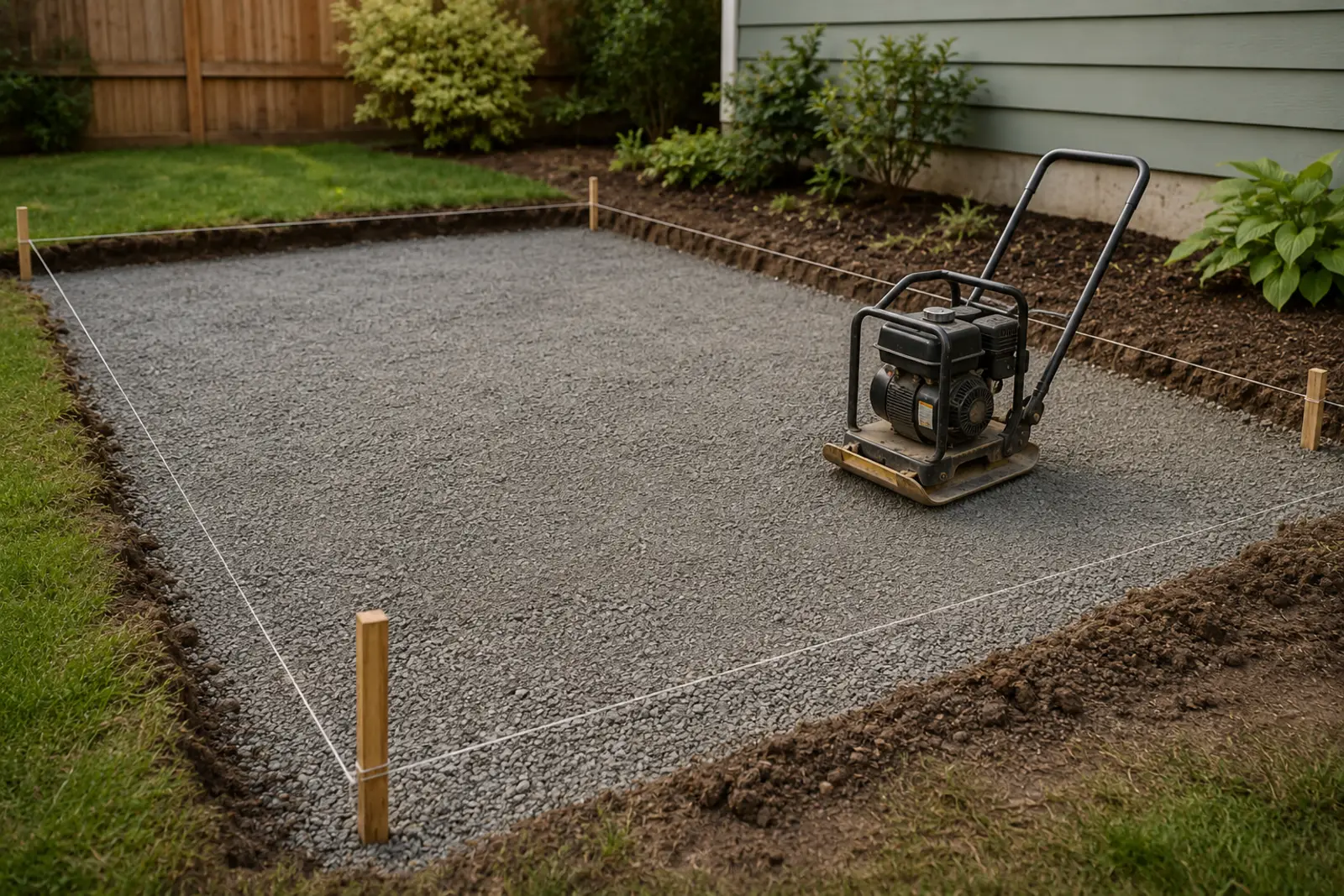
Quick answer
A typical bedding layer is about 1 inch of clean, coarse bedding sand or concrete sand over compacted base; 2 inches of loose crusher dust should not be used just to make up height unless the paver system or local specification allows it.
Assumptions
- DIY patio or walkway with compacted aggregate base below.
- Use this as a patio or walkway planning example, then follow the paver manufacturer's installation instructions for your product.
- No replacement for paver manufacturer instructions or local construction requirements.
Calculator inputs
Paver Base Calculator Results
Results update in your browser as you edit inputs. Use the shopping-list button for a printable project summary.
Enter project dimensions to calculate material quantity.
Bedding layer options
The better planning move is usually to build height with compacted base material, then keep the final bedding layer thin and even.
| Option | When it may work | Main risk | Better planning move |
|---|---|---|---|
| 1 inch concrete sand | Common bedding layer over a compacted aggregate base. | Still needs a smooth, compacted base below it. | Use this as the default unless your paver instructions require another depth. |
| 2 inches crusher dust | May be allowed by a specific paver system or local specification. | Loose fines can hold water or settle if used too thick. | Confirm the product instructions before using it as bedding. |
| Extra sand to raise height | Only for very small leveling corrections within product guidance. | Thick loose sand can shift, rut, or wash out. | Raise the grade with compacted base instead of loose bedding material. |
| Compacted base lift plus thin bedding layer | Best when the patio needs more height before pavers are laid. | Requires proper lift thickness, moisture, and compaction. | Add and compact base material, then screed a thin bedding layer. |
This table is for DIY patio and walkway planning. Follow manufacturer instructions and local requirements for your paver system.
Inputs used in this example
- Calculator defaults: 12 ft by 10 ft patio, 4 in compacted gravel base, 1 in bedding sand, and 20% waste or compaction factor.
- Adjust sand depth only if your product instructions require a different bedding depth.
Expected output
The embedded calculator keeps 1 inch bedding sand as the default so the estimate separates structural base quantity from the thin leveling layer.
When to adjust this example
- If the finished height is low, add compacted base in controlled lifts before the bedding layer.
- Do not treat loose sand or loose crusher dust as a structural base replacement.
- Use clean, coarse bedding sand, concrete sand, or the paver manufacturer's specified bedding material.
Formula explanation
- Calculate the patio area from the selected shape and dimensions.
- Multiply area by gravel base depth to estimate the compacted support layer quantity.
- Multiply area by bedding depth to estimate the thin sand layer quantity.
- Apply waste or compaction factor, then review cubic feet, cubic yards, tons, and bag counts.
Main calculator
Use the full Paver Base Calculator to change dimensions, waste factor, and optional user-entered unit price.
FAQ
Should paver bedding sand be 1 inch or 2 inches?
A common planning assumption is about 1 inch of bedding sand over compacted base. Use 2 inches only if the paver system or local specification allows it.
Can crusher dust be used as paver bedding?
Some systems allow crusher dust or stone screenings, but it is not a universal substitute for clean bedding sand. Check the paver manufacturer's instructions before using it.
Can I raise pavers with extra loose material?
Avoid raising pavers with thick loose sand or crusher dust. Build height with compacted base material, then finish with a thin bedding layer.
What sand goes between compacted gravel and brick pavers?
Use the bedding material specified by the paver manufacturer. Common planning choices are concrete sand, paver sand, or clean coarse angular sand.
Material words in plain English
- Bedding layer: the thin leveling layer directly under pavers, usually not the structural base.
- Crusher dust: fine crushed stone material that may compact tightly but can hold fines and moisture depending on the product.
- Compacted base: the crushed aggregate support layer below the bedding layer.
- Concrete sand: clean, coarse sand often used as paver bedding when allowed by the paver system.
Plan base height before bedding depth
If the paver surface needs to come up, first check whether the compacted base is too low. The bedding layer should finish the surface, not make up several inches of missing base height.
Sources and review notes
Reviewed . These references support the unit conversions and planning assumptions on this page. Confirm the exact product label and local project requirements before buying material.
- How the calculations work HomeMaterialCalc. How HomeMaterialCalc handles formulas, rounding, browser-based calculations, and prices you enter.
- NIST Guide to the SI, Appendix B: Conversion Factors National Institute of Standards and Technology. Length, area, and volume unit conversions used in calculator formulas.
- Construction of Interlocking Concrete Pavements Concrete Masonry & Hardscapes Association. Grade stakes, string-line layout, slope, aggregate base, bedding sand, paver, and compaction planning.
Related material guides
Use these guides when you want to understand the planning assumptions behind this worked example.
Use this quick depth checklist before estimating gravel, bedding sand, compaction overage, and total paver project materials.
Pavers guide Paver Patio Slope & String-Line PlannerConvert slope to total drop and build a stake-by-stake table for the finished paver surface, bedding, compacted base, and excavation.
Pavers guide Why Are My Pavers Sinking?Match sinking, rocking, low edges, joint washout, and drainage problems to likely causes before planning a repair material list.
Pavers guide Can You Lay Pavers on Sand Only?Use this decision checklist to separate bedding sand from structural base material before planning a patio, walkway, or small reset.
Pavers guide Paver Patio Material ChecklistUse this material-first checklist to prepare planner inputs for base gravel, bedding sand, paver count, edge restraint, joint sand, and overage.
Pavers guide How to Clean Paver Joints Before Re-SandingCheck joint depth, debris, weeds, loose pavers, drainage, and normal new paver gaps before adding joint sand or polymeric sand.
Mulch guide Mulch Depth GuideUse this guide to compare mulch depth, cubic yards, 2 cu ft bags, and settling overage before estimating a landscape bed.