Pavers planning guide
Can You Lay Pavers on Sand Only?
Use this decision checklist to separate bedding sand from structural base material before planning a patio, walkway, or small reset.
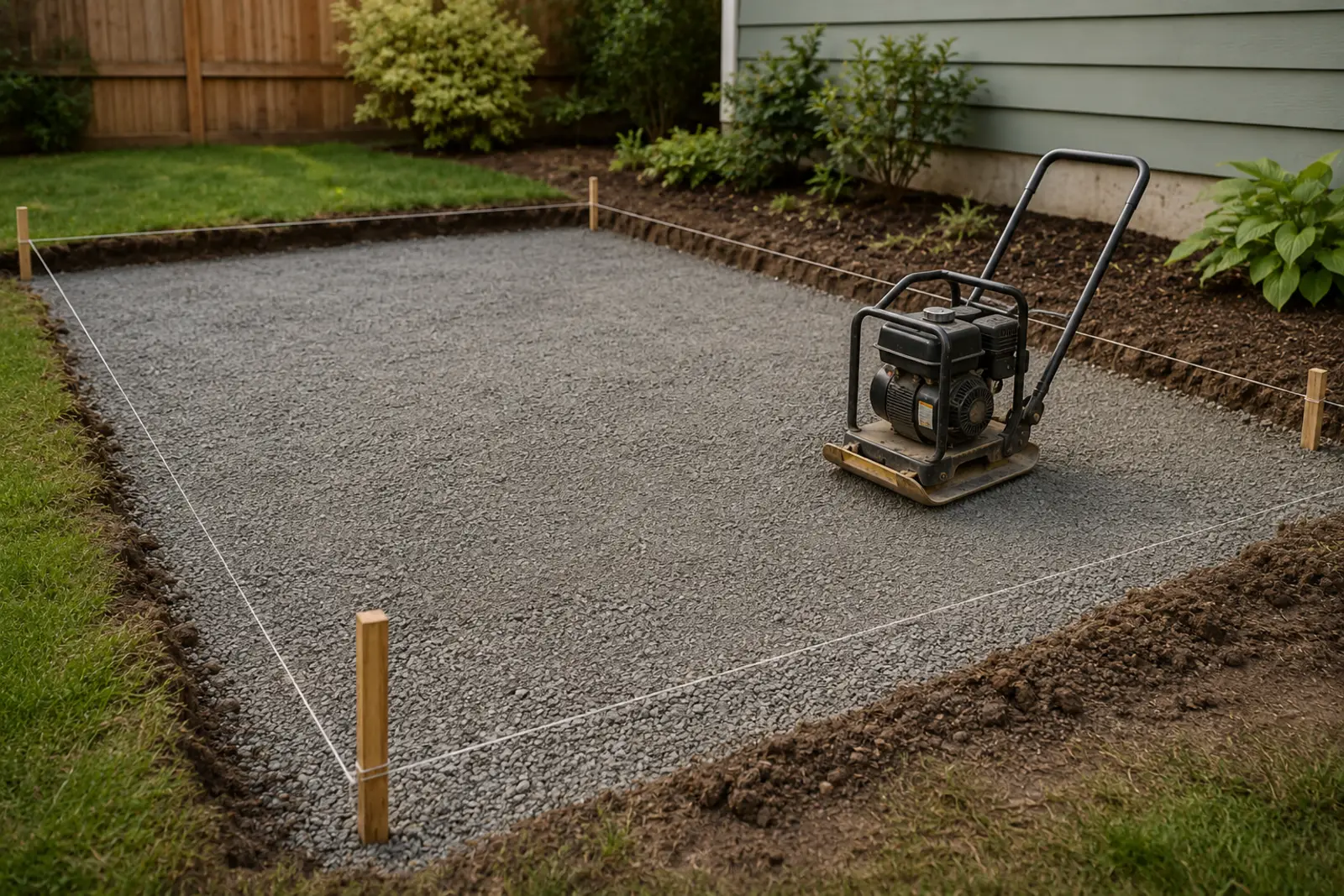
Quick answer
For most patios, walkways, and driveways, do not treat sand as the whole base. Bedding sand helps level and seat pavers, but bedding sand is not a structural base. A compacted gravel base usually carries the load and helps drain water.
A sand-only installation can look simple on paper because it removes gravel from the estimate. The risk is that sand can shift, hold water, wash out, or settle when it is asked to do the job of compacted base gravel.
Use this page as a planning filter before buying material. If the project needs a real base, estimate gravel and bedding sand separately, then check slope, edge restraint, and overage before ordering.
Sand-only paver decision checklist
Use the conditions below to decide whether sand-only planning is a red flag.
| Project condition | Sand-only risk | Planning next step |
|---|---|---|
| Patio with furniture or frequent foot traffic | Sand can shift and leave pavers uneven. | Plan compacted gravel base plus a thin bedding sand layer. |
| Walkway over firm, well-drained soil | A light path may still settle if edges spread or water collects. | Check base depth and edge restraint before reducing gravel. |
| Driveway or vehicle area | Sand alone is not a load-bearing base for vehicle traffic. | Use driveway-specific base guidance instead of patio assumptions. |
| Small reset of a few stable pavers | Existing base may already be doing the structural work. | Inspect the old base before adding only bedding sand. |
| Low area, clay soil, or poor drainage | Water can move sand and soften the supporting soil. | Solve drainage and base depth before estimating sand. |
| Temporary garden stepping stones | Movement may be acceptable if the surface is not structural. | Keep the scope light and avoid applying patio rules to it. |
This is a planning checklist, not a product installation instruction. Follow the paver and base material manufacturer guidance for the final system.
Example: 10 ft x 10 ft patio planned with sand only
Inputs
- Area: 100 sq ft
- Sand-only idea: 1 in to 2 in
- Use: patio furniture and foot traffic
Estimated result
Treat sand-only as a warning sign. Estimate compacted gravel base separately, then add about 1 inch of bedding sand as a leveling layer.
The patio needs a structural layer below the bedding sand. Removing gravel may reduce the estimate, but it also removes the layer that normally supports and drains the surface.
Example: reset a few stable pavers
Inputs
- Area: small repair patch
- Existing base: firm and compacted
- Issue: uneven bedding layer
Estimated result
A small amount of bedding sand may be part of the reset, but only after the existing base is confirmed firm and properly draining.
This is different from building a new patio on sand only. The old compacted base may already provide the structure.
Do not make the bedding layer thicker to replace gravel
A thicker sand layer is usually less stable, not more structural. If the base needs support, plan the compacted gravel layer instead of hiding the problem under extra sand.
Plan the base layers before buying material
Plan gravel base, bedding sand, paver count, edge restraint, joint sand, and bag versus bulk material options.
Related resource paver base depth decision guideChoose a planning base depth before estimating gravel, sand, overage, and project material quantities.
Related resource paver patio material checklistTurn dimensions, base depth, slope, pavers, edge restraint, joint sand, and overage into a practical material list.
Related resource paver slope and string-line plannerBuild grade-stake readings and check patio drop, drainage direction, and finished elevations.
Related resource sinking paver symptom checklistMatch sinking, rocking, low edges, washout, and joint gaps to likely base, drainage, or restraint problems.
Related resource paver base gravel and sand calculatorEstimate gravel base, bedding sand, cubic yards, tons, bags, overage, and optional user-entered material cost.
FAQ
Can I lay pavers directly on sand?
For most patios, walkways, and driveways, sand should not be the only base. A thin bedding sand layer can help level pavers, but compacted gravel usually provides the structural base.
Is bedding sand a structural base?
No. Bedding sand is mainly a leveling and seating layer. It is not a replacement for compacted base gravel when the project needs load support and drainage.
When might sand-only pavers be acceptable?
A very light temporary path or a small reset over an existing firm base may use limited sand. That is different from building a full patio or driveway on sand only.
How much sand should go under pavers?
A common planning assumption is about 1 inch of bedding sand over a compacted base. More sand is not usually a fix for a missing or weak base.
Sources and review notes
Reviewed . These references support the unit conversions and planning assumptions on this page. Confirm the exact product label and local project requirements before buying material.
- How the calculations work HomeMaterialCalc. How HomeMaterialCalc handles formulas, rounding, browser-based calculations, and prices you enter.
- NIST Guide to the SI, Appendix B: Conversion Factors National Institute of Standards and Technology. Length, area, and volume unit conversions used in calculator formulas.
- Construction of Interlocking Concrete Pavements Concrete Masonry & Hardscapes Association. Grade stakes, string-line layout, slope, aggregate base, bedding sand, paver, and compaction planning.