Pavers planning guide
Paver Patio Material Checklist
Use this material-first checklist to prepare planner inputs for base gravel, bedding sand, paver count, edge restraint, joint sand, and overage.
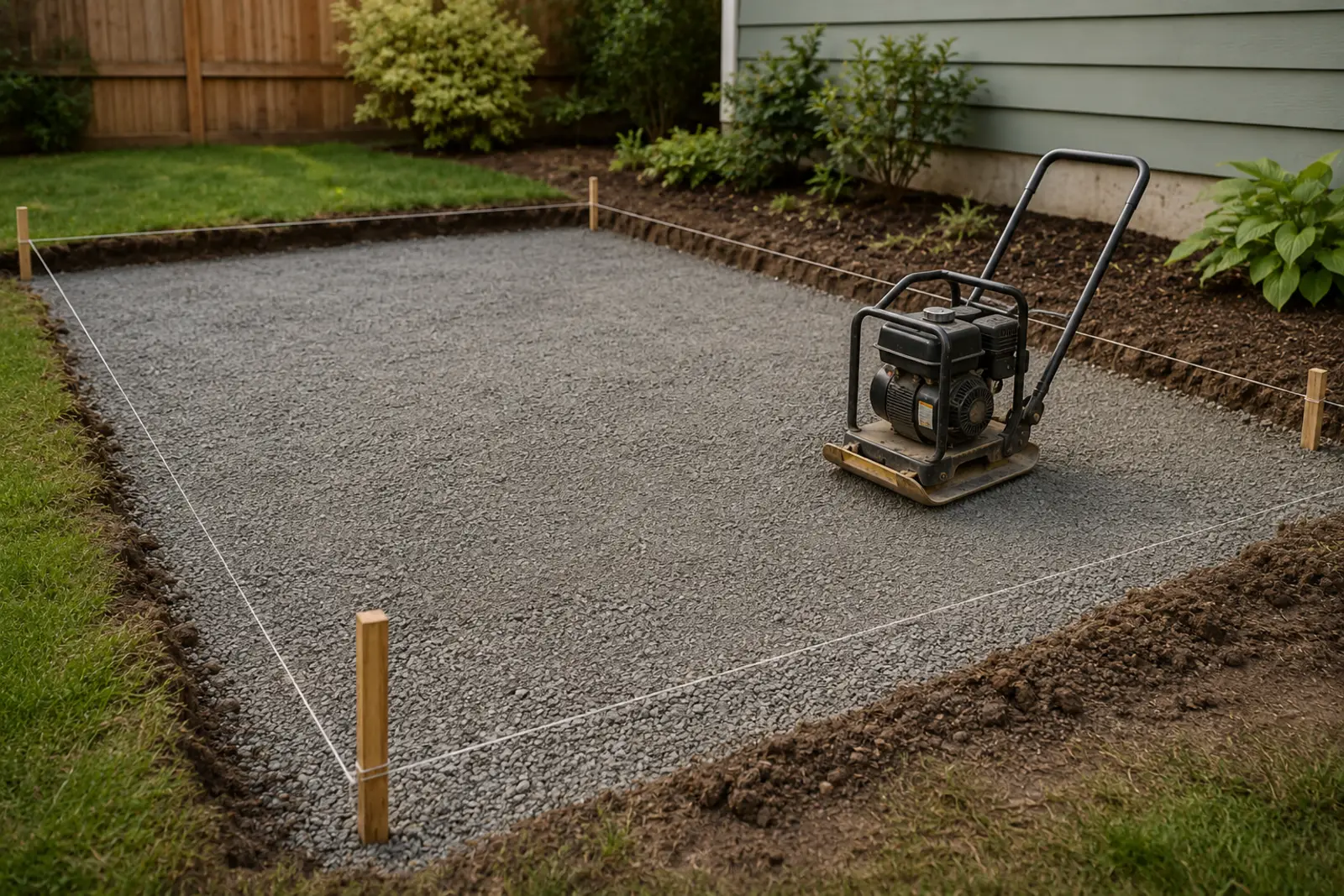
Quick answer
A useful paver patio material checklist starts with dimensions, then separates compacted base gravel, bedding sand, pavers, edge restraint, joint sand, and overage. Use the planner after you choose the assumptions, not before.
This checklist is for getting the material categories right before running numbers. It is not a generic article or a store quote. The goal is to make the paver base project planner easier to fill out with fewer hidden assumptions.
Measure the surface, choose a planning base depth, confirm drainage direction, and note edges before estimating quantities. If a project input is still unknown, mark it before opening the calculator.
Paver patio material checklist
Use this table as the handoff into the paver base project planner.
| Material or input | What to record | Why it matters |
|---|---|---|
| Patio dimensions | Length, width, shape notes, and any cutouts | Area drives paver count, base volume, sand volume, and joint sand planning. |
| Compacted base gravel | Planning depth and overage | This is usually the structural layer, so it should not be combined with bedding sand. |
| Bedding sand | Thin bedding depth, often planned separately | Bedding sand levels pavers but should not replace the gravel base. |
| Pavers | Paver size, area per paver, pattern waste | Paver count changes with layout, cuts, border rows, and breakage allowance. |
| Edge restraint | Perimeter length and restraint type | Edges help prevent spreading and low edge settlement. |
| Joint sand | Joint width, joint depth, and surface area | Joint sand belongs after pavers are stable, clean, and dry enough for the chosen product. |
| Slope and drainage | High edge, low edge, total drop, outlet path | Slope can change excavation and prevents water from being trapped against the house. |
| Overage | Waste factor for each material | Irregular edges, compaction, cuts, and repair uncertainty can increase material needs. |
Keep price fields blank unless you are entering your own known unit price. This site does not provide live prices or quotes.
Example: checklist for a 12 ft x 14 ft patio
Inputs
- Area: 168 sq ft
- Base: 4 in compacted gravel
- Bedding sand: 1 in
- Slope: away from house
Estimated result
The planner inputs are area, base depth, bedding depth, paver size or coverage, edge length, joint sand assumption, and overage.
The checklist prevents the common mistake of estimating pavers only while forgetting base gravel, restraint, joint sand, or drainage.
Example: material list for a repair edge
Inputs
- Area: edge strip only
- Likely items: base gravel, bedding sand, restraint, spikes
- Unknown: drainage at low edge
Estimated result
Do not open with a full-patio quantity if only an edge is being rebuilt. Measure the affected strip and include restraint materials.
Repair work often needs different quantities than a new patio because the failed edge, not the whole surface, determines the material list.
Open the planner after the assumptions are visible
The planner is most useful when base depth, bedding sand depth, paver size, edge length, and overage are explicit. Unknown inputs should be checked, not hidden inside default values.
Check assumptions before using the planner
Plan gravel base, bedding sand, paver count, edge restraint, joint sand, and bag versus bulk material options.
Related resource free Paver Patio Planning PackTurn this checklist into a printable material plan with the free Paver Patio Planning Pack.
Related resource paver base depth decision guideChoose a planning base depth before estimating gravel, sand, overage, and project material quantities.
Related resource sand-only paver base decision guideDecide when sand alone is too weak and why bedding sand is not the structural base layer for most paver projects.
Related resource paver slope and string-line plannerBuild grade-stake readings and check patio drop, drainage direction, and finished elevations.
Related resource sinking paver symptom checklistMatch sinking, rocking, low edges, washout, and joint gaps to likely base, drainage, or restraint problems.
Related resource paver base gravel and sand calculatorEstimate gravel base, bedding sand, cubic yards, tons, bags, overage, and optional user-entered material cost.
FAQ
What materials do I need for a paver patio?
Most material lists include compacted base gravel, bedding sand, pavers, edge restraint, spikes, joint sand, and overage. Drainage and slope assumptions should be checked before quantities are finalized.
Should I estimate gravel and sand together?
No. Estimate compacted base gravel and bedding sand as separate layers because they do different jobs and usually use different depths.
When should I use the paver base project planner?
Use the planner after you have dimensions, base depth, bedding sand depth, paver size or coverage, edge length, joint sand assumptions, and overage.
Does this checklist include paver prices?
No. It helps organize material quantities. If a calculator has price fields, enter only your own known unit price; the site does not provide live prices or quotes.
Sources and review notes
Reviewed . These references support the unit conversions and planning assumptions on this page. Confirm the exact product label and local project requirements before buying material.
- How the calculations work HomeMaterialCalc. How HomeMaterialCalc handles formulas, rounding, browser-based calculations, and prices you enter.
- NIST Guide to the SI, Appendix B: Conversion Factors National Institute of Standards and Technology. Length, area, and volume unit conversions used in calculator formulas.
- Construction of Interlocking Concrete Pavements Concrete Masonry & Hardscapes Association. Grade stakes, string-line layout, slope, aggregate base, bedding sand, paver, and compaction planning.