Pavers planning guide
Paver Patio Slope & String-Line Planner
Convert slope to total drop and build a stake-by-stake table for the finished paver surface, bedding, compacted base, and excavation.
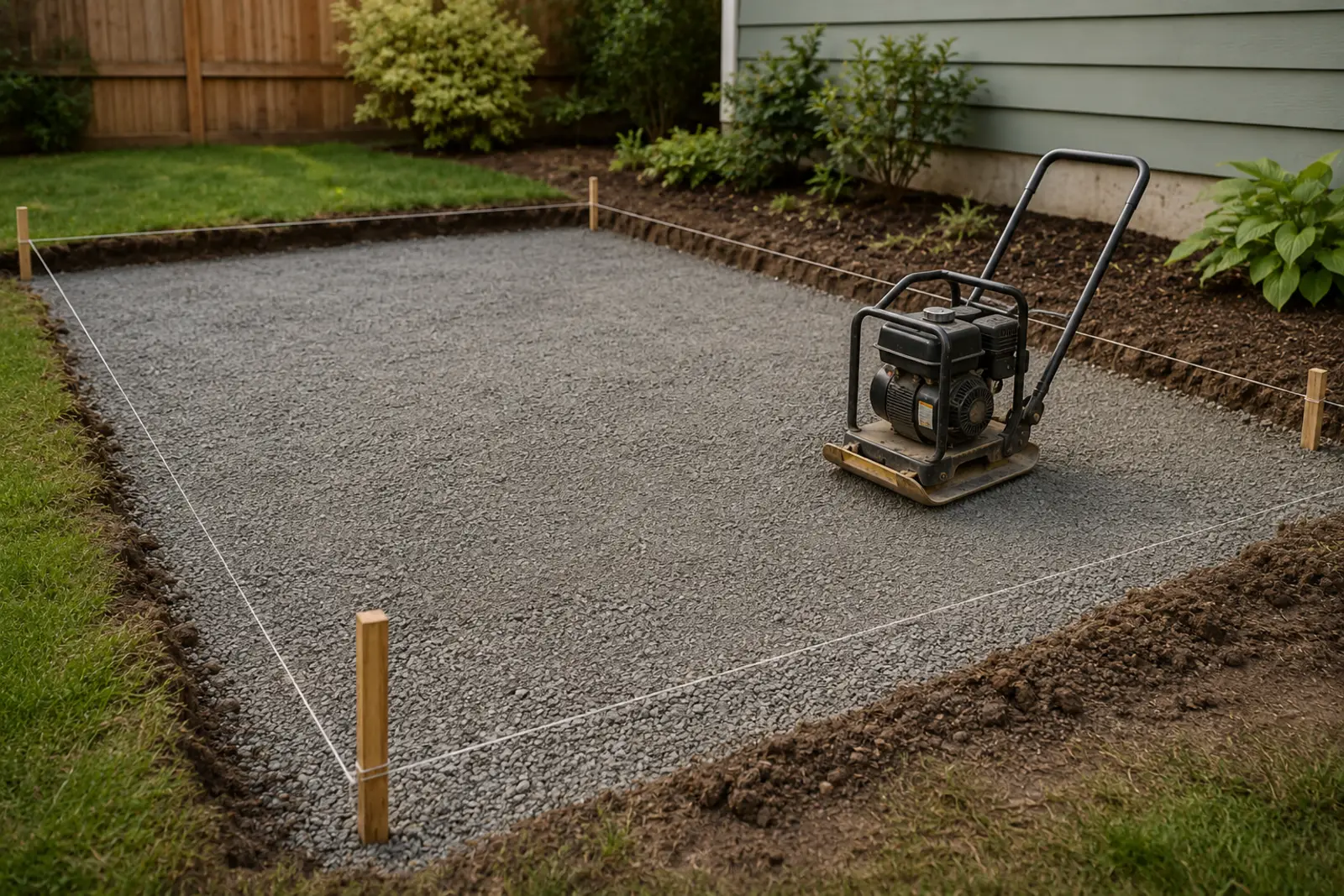
Interactive layout tool
Plan string-line and grade-stake readings
Set one level reference string, then use the table to measure down at each stake for the paver surface and each layer below it.
Calculated in your browser. Your dimensions stay on this device.
Enter your layout to build a stake-by-stake table.
Quick answer
Industry and manufacturer guidance commonly starts around a 1.5% to 2% slope for interlocking pavers, roughly 3/16 inch to 1/4 inch of drop per foot. Confirm the requirement for your system and site, and make sure the low side releases water without draining into a window well, low door threshold, or trapped corner.
Slope changes the excavation and base plan even though it is not a separate material layer. Use the planner above to set the total drop and stake readings, keep the selected gravel and bedding depths across the run, and confirm that the low side releases water instead of sending it toward the house, a window well, a fence line, or a trapped corner.
Drainage risk checklist before setting slope
| Condition | Why it matters | What to check next |
|---|---|---|
| Patio touches the house | Water should not be directed toward the foundation. | Confirm the high side, low side, and drainage outlet before excavating. |
| Window well or basement opening nearby | A low corner can send runoff toward the well. | Avoid creating a slope path into the well or trapped area. |
| Fence, wall, or raised bed on the low side | The low side may not actually drain. | Look for an open discharge path or alternate grading plan. |
| Door threshold is close to patio height | Slope and paver thickness can reduce clearance. | Check finished elevation before choosing base depth. |
| Existing patio has ponding | The issue may be slope, base settlement, or blocked drainage. | Use the sinking paver checklist before only adding joint sand. |
Slope does not fix a weak base
A patio can have visible slope and still sink if the base is too shallow, poorly compacted, or holding water. Check base depth and drainage together before ordering material.
Turn the slope plan into a material list
Plan gravel base, bedding sand, paver count, edge restraint, joint sand, and bag versus bulk material options.
Related resource paver base depth decision guideChoose a planning base depth before estimating gravel, sand, overage, and project material quantities.
Related resource sinking paver symptom checklistMatch sinking, rocking, low edges, washout, and joint gaps to likely base, drainage, or restraint problems.
FAQ
How much should a paver patio slope away from a house?
Industry and manufacturer guidance often starts around 1.5% to 2%, roughly 3/16 inch to 1/4 inch per foot. The right value depends on the project, drainage outlet, product instructions, accessibility needs, and local requirements.
What is the total drop for 1 inch over 4 feet?
One inch over 4 feet is the same as 1/4 inch per foot. Over a 12 foot run, that rate would produce about 3 inches of total drop.
Can a paver patio slope toward a window well?
Avoid planning runoff into a window well or other trapped low area. Check where water will exit before setting the final high and low edges.
Does slope change how much paver base I need?
Slope can change excavation and finished elevations, but gravel base and bedding sand should still be estimated as separate compacted layers across the project area.
Sources and review notes
Reviewed . These references support the unit conversions and planning assumptions on this page. Confirm the exact product label and local project requirements before buying material.
- How the calculations work HomeMaterialCalc. How HomeMaterialCalc handles formulas, rounding, browser-based calculations, and prices you enter.
- NIST Guide to the SI, Appendix B: Conversion Factors National Institute of Standards and Technology. Length, area, and volume unit conversions used in calculator formulas.
- Construction of Interlocking Concrete Pavements Concrete Masonry & Hardscapes Association. Grade stakes, string-line layout, slope, aggregate base, bedding sand, paver, and compaction planning.