Pavers planning guide
Why Are My Pavers Sinking?
Match sinking, rocking, low edges, joint washout, and drainage problems to likely causes before planning a repair material list.
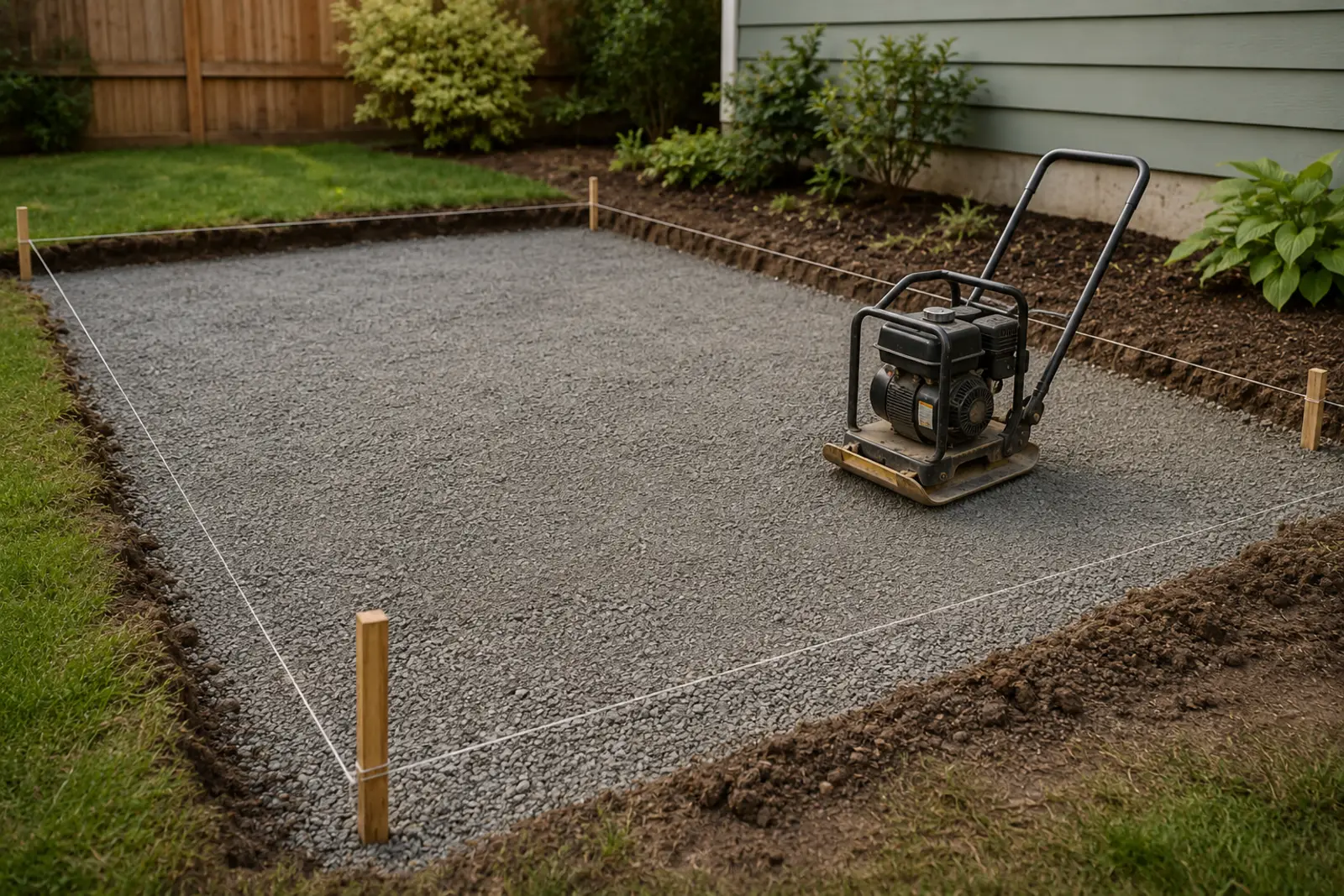
Quick answer
Pavers usually sink because something below or beside them has moved: shallow base, poor compaction, trapped water, missing edge restraint, too much bedding sand, or joint washout. The repair plan depends on the symptom, not just on adding more polymeric sand.
Before buying replacement pavers or more joint sand, identify the pattern. A single low paver, a whole settled edge, a wet corner, and a driveway rut point to different checks and different material quantities.
Sinking paver symptom matrix
Use this matrix to decide what to inspect before planning base gravel, bedding sand, edge restraint, or joint sand.
| Symptom | Possible cause | What to check | Next planning step |
|---|---|---|---|
| One or two low pavers | Bedding sand void, localized washout, or uneven base | Lift nearby pavers and inspect sand thickness and base firmness. | Plan a small reset area and keep bedding sand thin and even. |
| A whole edge is dropping | Weak or missing edge restraint, base too narrow, or water escaping at the edge | Check whether the compacted base extends past the paver edge and whether restraint is secure. | Include edge restraint and overdig in the repair material list. |
| Pavers sink after rain | Drainage problem, water path under the pavers, or fines washing out | Look for ponding, downspout discharge, trapped corners, and washed joints. | Check patio slope and drainage before adding more sand. |
| Pavers rock or feel hollow | Poor compaction, uneven bedding layer, or base movement | Check whether base gravel was compacted in lifts and whether bedding sand is too thick. | Rebuild the affected area instead of only filling joints. |
| Driveway pavers rut | Base depth or compaction may be inadequate for vehicle loads | Check depth, soil support, edge restraint, and traffic path. | Do not use a light patio base assumption for repair planning. |
| Polymeric sand keeps washing out | Joint depth, drainage, cleaning, or movement issue | Check joint cleanliness, joint depth, water flow, and loose paver movement. | Fix movement or drainage before re-sanding joints. |
This checklist is for planning and diagnosis. It is not a structural repair specification.
Repair planning checklist
| Layer or part | Why it can cause sinking | Material to estimate |
|---|---|---|
| Base depth | Too little compacted gravel can allow settlement. | Base gravel volume plus overage. |
| Compaction | Loose base can settle after use or rain. | Extra gravel only if the rebuilt area needs added depth. |
| Drainage | Water can soften soil, carry fines, or collect below pavers. | Drainage correction is planned before final material quantity. |
| Edge restraint | Edges can spread and let the surface drop. | Edge restraint length, spikes, and extra base beyond the paver edge. |
| Bedding layer | Too much bedding sand can shift or settle. | Bedding sand for the reset area, usually planned separately from base gravel. |
| Joint washout | Open joints can let water and movement worsen. | Polymeric or joint sand after the pavers are stable and joints are clean. |
Example: low corner near a downspout
Inputs
- Symptom: one wet low corner
- Likely checks: slope, drainage outlet, base washout
- Repair area: measure affected square feet
Estimated result
Plan the repair area first, then estimate base gravel and bedding sand for the lifted section after the drainage path is addressed.
Adding joint sand may not hold if water keeps entering the base or washing material out of the joints.
Example: settled patio edge
Inputs
- Symptom: several edge pavers dropped
- Likely checks: edge restraint and base overdig
- Repair items: restraint, spikes, base gravel, bedding sand
Estimated result
The material list should include edge restraint and enough compacted base beyond the paver edge, not just replacement pavers.
A narrow or unsupported edge can move outward, which lets pavers rotate or settle even when the center area looks stable.
Do not re-sand moving pavers first
If pavers are rocking, sinking, or spreading, clean and re-sand joints only after the movement source is addressed. Joint sand is not a substitute for base repair.
Plan the repair material list
Plan gravel base, bedding sand, paver count, edge restraint, joint sand, and bag versus bulk material options.
Related resource free Paver Patio Planning PackTurn this checklist into a printable material plan with the free Paver Patio Planning Pack.
Related resource paver base gravel and sand calculatorEstimate gravel base, bedding sand, cubic yards, tons, bags, overage, and optional user-entered material cost.
Related resource paver base depth decision guideChoose a planning base depth before estimating gravel, sand, overage, and project material quantities.
Related resource paver slope and string-line plannerBuild grade-stake readings and check patio drop, drainage direction, and finished elevations.
Related resource clean paver joints before re-sanding guideCheck joint depth, debris, weeds, loose pavers, and drainage before adding new joint sand or polymeric sand.
FAQ
Why are my pavers sinking in one spot?
A small low spot can come from uneven bedding sand, a void, localized washout, or a weak base area. Lift nearby pavers and inspect the base and bedding layer before choosing a repair.
Can I fix sinking pavers by adding polymeric sand?
Not if the pavers are moving or the base is settling. Polymeric sand may help stable, clean joints, but it does not rebuild base depth, compaction, drainage, or edge restraint.
Why do pavers sink after rain?
Rain-related sinking often points to drainage, washout, soft soil, or water moving through the base. Check slope and water outlets before only replacing sand.
How much material do I need to repair sinking pavers?
Measure the affected area, decide whether base gravel, bedding sand, edge restraint, or joint sand is involved, then estimate each material separately with a small overage.
Sources and review notes
Reviewed . These references support the unit conversions and planning assumptions on this page. Confirm the exact product label and local project requirements before buying material.
- How the calculations work HomeMaterialCalc. How HomeMaterialCalc handles formulas, rounding, browser-based calculations, and prices you enter.
- NIST Guide to the SI, Appendix B: Conversion Factors National Institute of Standards and Technology. Length, area, and volume unit conversions used in calculator formulas.
- Construction of Interlocking Concrete Pavements Concrete Masonry & Hardscapes Association. Grade stakes, string-line layout, slope, aggregate base, bedding sand, paver, and compaction planning.