Worked example
Can Bedrock Substitute for a Paver Base?
Use this planning guide when a patio or walkway excavation exposes rock and you need to decide what still belongs between the rock and the pavers.
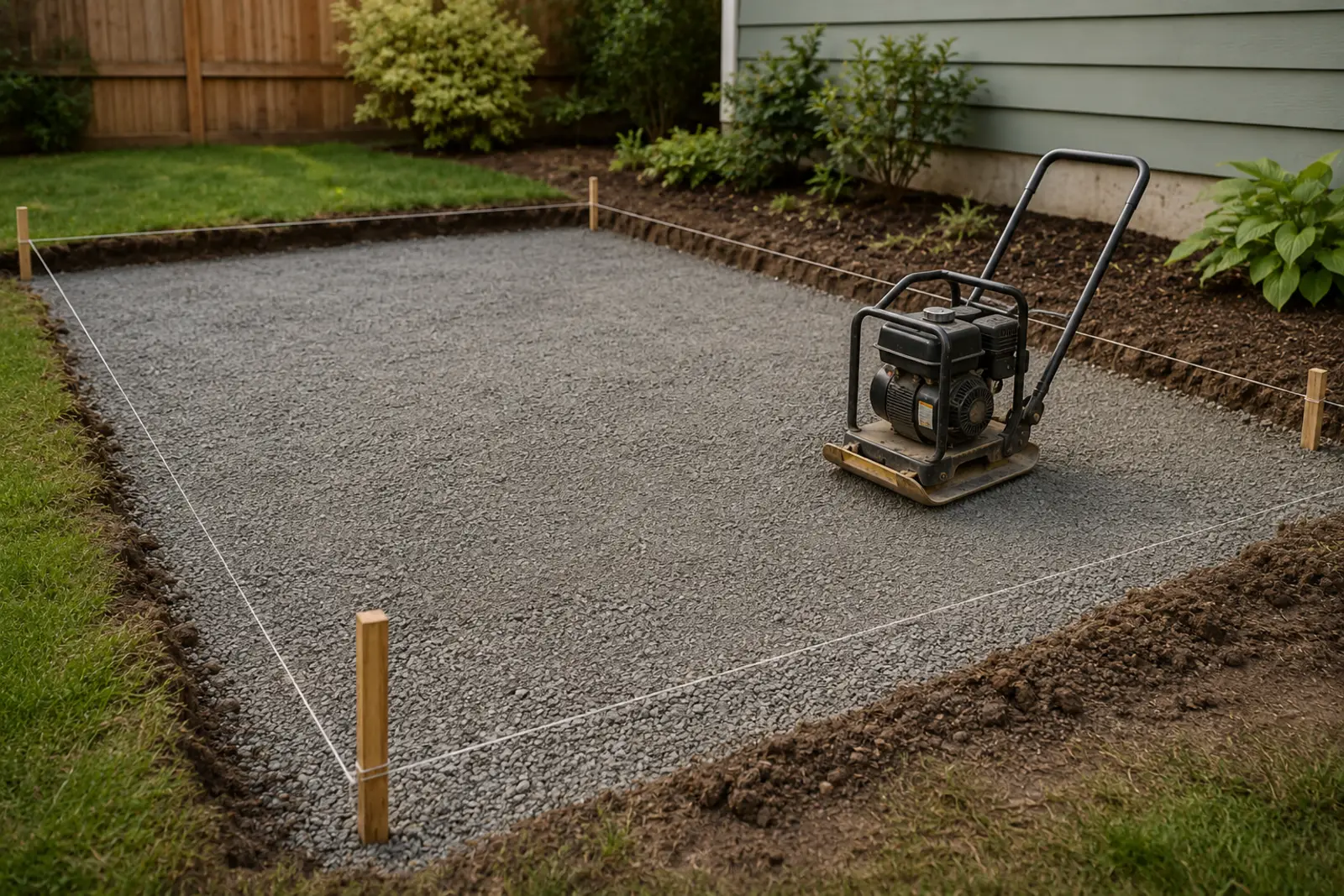
Quick answer
Solid, stable, draining bedrock may reduce the need for excavated gravel, but pavers still need a flat, supported bedding layer, slope, edge restraint, and drainage planning.
Assumptions
- DIY patio or walkway scale.
- No engineered driveway load or structural design.
- No replacement for local code, paver manufacturer instructions, or site-specific drainage review.
Calculator inputs
Paver Base Calculator Results
Results update in your browser as you edit inputs. Use the shopping-list button for a printable project summary.
Enter project dimensions to calculate material quantity.
Bedrock condition planning check
Use this table before changing gravel depth. Bedrock can reduce excavation in some small projects, but it does not remove the need for a level bedding layer, slope, drainage, and edge restraint.
| Bedrock condition | What it means | Planning action |
|---|---|---|
| Solid and sloped to drain | The rock may already provide a stable support surface. | Plan a thin bedding layer, confirm slope, and use the calculator with a reduced gravel depth only after checking the whole area. |
| Uneven high spots | Pavers can rock or bridge over hard points. | Remove high spots or add compacted base in low areas so the bedding layer stays thin and even. |
| Fractured or loose rock | Broken rock can move like poor base material. | Treat loose zones as unstable and plan compacted aggregate base rather than relying on the rock alone. |
| Water-holding pockets | Standing water can soften bedding material and cause settlement. | Plan drainage, fill pockets with compacted base, and keep the finished patio sloped away from structures. |
| Soil pockets between rock | Soil can compress or wash out under the pavers. | Remove soft soil pockets and replace them with compacted base before adding bedding sand. |
This is a DIY planning screen for patios and walkways, not a structural design.
Inputs used in this example
- The exposed bedrock has been cleaned enough to inspect low spots, fractures, drainage, and slope.
- Calculator defaults: 12 ft by 10 ft patio, 2 in gravel base, 1 in bedding sand, and 15% waste or compaction factor.
- The gravel depth is intentionally modest in this example and should be adjusted only after site conditions are confirmed.
Expected output
The embedded calculator separates the reduced gravel allowance from the 1 inch bedding layer so you can compare quantity planning without treating rock as a finished paver setting surface.
When to adjust this example
- Increase gravel depth where rock is fractured, uneven, water-holding, or interrupted by soil pockets.
- Keep the bedding layer thin and supported; do not use thick loose sand to hide uneven rock.
- Confirm slope, drainage outlet, edge restraint, and manufacturer instructions before buying materials.
Formula explanation
- Measure the paver area and select the closest calculator shape.
- Enter the gravel depth that remains after evaluating the bedrock surface.
- Keep bedding sand as a thin leveling layer, commonly about 1 inch unless product instructions say otherwise.
- Apply the waste or compaction factor and check cubic feet, cubic yards, tons, and bags as planning estimates.
Main calculator
Use the full Paver Base Calculator to change dimensions, waste factor, and optional user-entered unit price.
FAQ
Can I set pavers directly on bedrock?
Usually you should not set pavers directly on bare rock. Even solid bedrock still needs a flat, supported bedding layer so pavers sit evenly and can be adjusted.
Does bedrock solve patio drainage?
No. Bedrock can hold water in pockets or send water toward the house. Plan slope, drainage paths, and filled low spots before reducing the gravel base estimate.
Do I still need bedding sand over bedrock?
Plan for a thin bedding layer such as concrete sand or paver sand unless your paver system gives different instructions. The bedding layer levels the pavers; it is not the structural base.
When should I ask a local professional?
Ask for local help if the rock is fractured, water collects on it, the patio touches a foundation, the area carries vehicle loads, or the project must meet code or structural requirements.
Plan the rest of the paver system
Bedrock changes the excavation question, not the whole paver system. A finished patio still needs a flat bedding layer, controlled slope, edge restraint, and drainage that does not trap water under the pavers.
Sources and review notes
Reviewed . These references support the unit conversions and planning assumptions on this page. Confirm the exact product label and local project requirements before buying material.
- How the calculations work HomeMaterialCalc. How HomeMaterialCalc handles formulas, rounding, browser-based calculations, and prices you enter.
- NIST Guide to the SI, Appendix B: Conversion Factors National Institute of Standards and Technology. Length, area, and volume unit conversions used in calculator formulas.
- Construction of Interlocking Concrete Pavements Concrete Masonry & Hardscapes Association. Grade stakes, string-line layout, slope, aggregate base, bedding sand, paver, and compaction planning.
Related material guides
Use these guides when you want to understand the planning assumptions behind this worked example.
Use this quick depth checklist before estimating gravel, bedding sand, compaction overage, and total paver project materials.
Pavers guide Paver Patio Slope & String-Line PlannerConvert slope to total drop and build a stake-by-stake table for the finished paver surface, bedding, compacted base, and excavation.
Pavers guide Why Are My Pavers Sinking?Match sinking, rocking, low edges, joint washout, and drainage problems to likely causes before planning a repair material list.
Pavers guide Can You Lay Pavers on Sand Only?Use this decision checklist to separate bedding sand from structural base material before planning a patio, walkway, or small reset.
Pavers guide Paver Patio Material ChecklistUse this material-first checklist to prepare planner inputs for base gravel, bedding sand, paver count, edge restraint, joint sand, and overage.
Pavers guide How to Clean Paver Joints Before Re-SandingCheck joint depth, debris, weeds, loose pavers, drainage, and normal new paver gaps before adding joint sand or polymeric sand.
Mulch guide Mulch Depth GuideUse this guide to compare mulch depth, cubic yards, 2 cu ft bags, and settling overage before estimating a landscape bed.