Landscaping
Paver Base Calculator
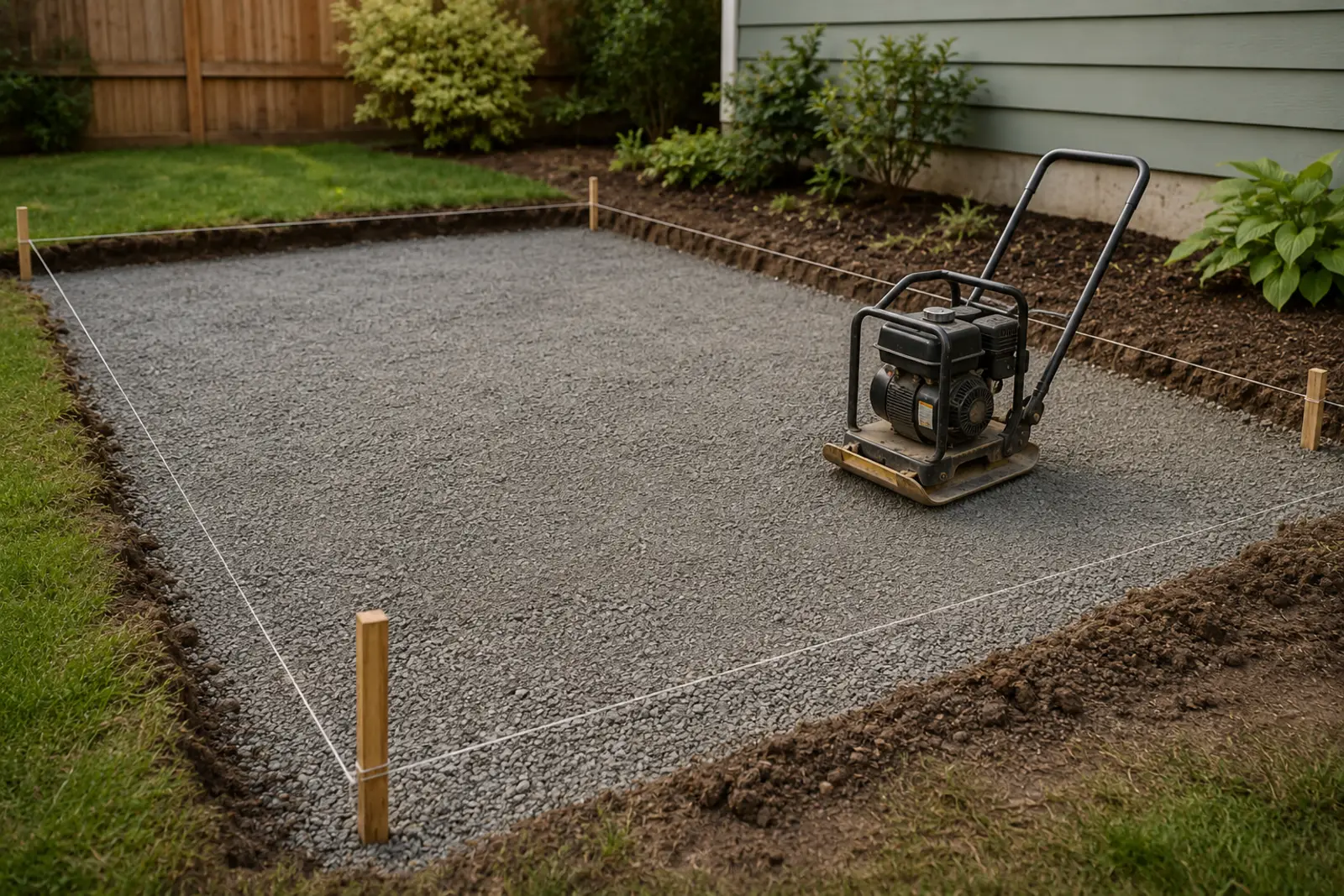
Use this paver base calculator to estimate paver base gravel, bedding sand, tons, bags, excavation depth, waste, and optional cost for patios, walkways, and driveways. As a base calculator for pavers it includes a compaction factor, and as a paving base calculator it converts area and depth into cubic feet, cubic yards, and tons.
Calculator inputs
Paver Base Calculator Results
Results update in your browser as you edit inputs. They are planning estimates, not complete shopping lists.
Enter project dimensions to calculate material quantity.
Assumptions
- Rectangle, circle, and custom area modes are simple planning shapes.
- Base gravel and bedding sand depths are planning depths; follow your paver manufacturer's base specification.
- Tons are approximate because material density varies by aggregate type, moisture, supplier, and compaction.
- Bag counts are rounded up and use the bag yield you enter.
- Pavers, edge restraint, joint sand, geotextile, excavation, drainage, compaction equipment, delivery, and labor are not included.
- This calculator estimates material quantity only. It does not design the patio base or verify soil, drainage, slope, freeze-thaw, or driveway load requirements.
- Any cost estimate uses only the unit price you enter. No store or local price data is used.
Formula
- Rectangle area = length x width. Circle area = pi x (diameter / 2)^2. Custom area uses the area you enter.
- Gravel volume in cubic feet = area x gravel base depth in feet.
- Sand volume in cubic feet = area x sand bedding depth in feet.
- Cubic yards = cubic feet / 27.
- Tons = cubic yards x material density in tons per cubic yard.
- Waste-adjusted quantity = base quantity x (1 + waste or compaction factor).
- Bag count = ceil(waste-adjusted cubic feet / bag yield).
Paver Base Calculator Examples
10 ft x 12 ft patio base
A 120 sq ft patio with 4 in gravel, 1 in bedding sand, and a 20% compaction allowance estimates about 48.00 cu ft of gravel and 12.00 cu ft of sand with overage.
- Area: 120 sq ft
- Gravel depth: 4 in
- Sand depth: 1 in
- Adjusted volume: 48.00 cu ft gravel and 12.00 cu ft sand
3 ft x 30 ft walkway base
A 90 sq ft walkway with 4 in gravel, 1 in bedding sand, and a 20% compaction allowance estimates about 36.00 cu ft of gravel and 9.00 cu ft of sand with overage.
- Area: 90 sq ft
- Gravel depth: 4 in
- Sand depth: 1 in
- Adjusted volume: 36.00 cu ft gravel and 9.00 cu ft sand
Units and Parameters Quick Reference
Paver base inputs
Base depth, density, and bag yield should be checked against product instructions and site conditions.
| Input | Unit | Planning note |
|---|---|---|
| Project shape | rectangle, circle, custom | Controls the area formula. |
| Gravel base depth | in | Usually thicker than the bedding sand layer. |
| Sand bedding depth | in | Usually entered as a thinner leveling layer. |
| Density | tons/cu yd | Used only for approximate gravel tons. |
| Bag yield | cu ft/bag | Used to round bag count up. |
General estimates do not replace local base design, drainage, compaction, or manufacturer requirements.
How to Use the Paver Base Calculator
Choose the project shape, enter dimensions or custom area, select the unit, then enter gravel depth, sand depth, waste or compaction factor, density, and bag yield.
The calculator returns area, gravel volume, sand volume, tons, bag counts, excavation depth, waste-adjusted quantity, and optional cost from your own material price.
Recommended Paver Base Depth by Project Type
These are general estimates for planning. They do not replace local construction requirements, soil evaluation, drainage design, or manufacturer recommendations.
Typical paver base depth
| Project type | Typical gravel base depth | Typical sand bedding depth | Notes |
|---|---|---|---|
| Patio | 4 in | 1 in | Use more base for poor soil, drainage concerns, or heavy use. |
| Walkway | 3 to 4 in | 1 in | Light foot traffic may need less base than vehicle areas. |
| Driveway | 6 to 12 in or engineered design | 1 in | Vehicle loads need local requirements and professional judgment. |
| Other | Use product guidance | Use product guidance | Confirm depth with manufacturer instructions and site conditions. |
Increase base depth when soil is soft, drainage is poor, or freeze-thaw conditions apply.
Gravel Base vs Sand Bedding Layer
The gravel base is the compacted support and drainage layer. It carries load and helps prevent movement.
The sand bedding layer is a thinner leveling layer above the gravel. It is not a substitute for compacted base gravel.
How Waste and Compaction Affect the Estimate
The waste or compaction factor increases gravel and sand quantities after the base volume is calculated.
Use it for compaction, small losses, uneven excavation, edge adjustments, and field changes. The calculator applies this factor before rounding bag counts up.
Why you need a compaction factor for paver base
Loose crushed gravel takes up more space than the same gravel after it is compacted. As the plate compactor drives the angular pieces together, the volume shrinks by roughly 15 to 25%, depending on the stone, moisture, and lift thickness. If you order only the finished compacted volume, you will fall short.
Because of this, the compacted depth you want is not the loose volume you buy. As a planning rule, add about 20% extra loose material so a 4-inch compacted base actually finishes at 4 inches. That is why this paving base calculator applies a waste or compaction factor on top of the base volume before reporting cubic yards, tons, and bags. Confirm the exact density and shrinkage with your gravel supplier, since values vary by product.
Paver base gravel by patio size
Approximate loose gravel for a 4-inch compacted base, including about 20% extra for compaction. Tons are estimated at about 1.4 tons per cubic yard.
| Patio size (sq ft) | Gravel for 4-inch base (cu yd) | Approx. tons |
|---|---|---|
| 50 sq ft | 0.74 cu yd | 1.0 tons |
| 100 sq ft | 1.48 cu yd | 2.1 tons |
| 200 sq ft | 2.96 cu yd | 4.1 tons |
| 300 sq ft | 4.44 cu yd | 6.2 tons |
| 500 sq ft | 7.41 cu yd | 10.4 tons |
| 700 sq ft | 10.37 cu yd | 14.5 tons |
Includes about 20% for compaction; confirm density with your supplier. Figures are planning estimates, not a delivery quote, and do not include bedding sand.
Cubic Yards, Tons, and Bags Explained
Cubic feet measure volume directly from area and depth. Cubic yards are cubic feet divided by 27.
Tons are estimated by multiplying cubic yards by the density you enter. Bag count is estimated by dividing waste-adjusted cubic feet by bag yield and rounding up.
Paver Base Calculation Examples
These examples use 1.4 tons per cubic yard, 0.5 cu ft per bag, and 10% waste or compaction factor.
Worked examples
| Example | Area | Base depth | Volume | Tons or bags |
|---|---|---|---|---|
| 10 ft x 12 ft patio | 120 sq ft | 4 in gravel + 1 in sand | 44.00 cu ft gravel / 11.00 cu ft sand with waste | 1.71 tons gravel / 88 gravel bags / 22 sand bags |
| 3 ft x 30 ft walkway | 90 sq ft | 4 in gravel + 1 in sand | 33.00 cu ft gravel / 8.25 cu ft sand with waste | 1.28 tons gravel / 66 gravel bags / 17 sand bags |
Bag counts use 0.5 cu ft per bag and are rounded up.
Related paver and material calculators
Use the paver calculator for paver unit count. Use the gravel calculator when you need a general gravel volume and tons estimate outside a paver base.
Example calculation
Example: 10 x 12 patio base
A 10 ft by 12 ft patio is 120 sq ft. With 4 in gravel, 1 in bedding sand, and 10% waste, it needs about 44 cu ft of gravel and 11 cu ft of sand.
Common mistakes
- Using paver count without planning base gravel and bedding sand.
- Entering base depth in feet instead of inches.
- Treating a volume estimate as a finished base design for poor soil, slopes, drainage, or vehicle loads.
FAQ
How deep should paver base be?
Depth depends on soil, drainage, climate, traffic, and product instructions. A light patio often starts around 4 inches of gravel base and 1 inch of bedding sand, while driveways usually need more and may require professional design.
How much paver base do I need for 100 square feet?
At 4 inches of gravel base, 100 sq ft needs about 33.33 cu ft before waste. With 10% waste or compaction, that becomes about 36.67 cu ft, or 1.36 cu yd.
How much gravel and sand do I need for pavers?
Enter the paver area, gravel depth, sand depth, and waste factor. The calculator separates gravel and bedding sand into cubic feet, cubic yards, bags, and gravel tons.
Should I add extra for compaction?
Usually yes. A waste or compaction factor helps account for compaction, uneven excavation, small losses, and field changes.
Can I calculate paver base in tons and bags?
Yes. The calculator estimates gravel tons from cubic yards and density, then estimates gravel and sand bag counts from your entered bag yield.
Do I need sand under pavers?
Yes. Pavers are normally set on about 1 inch of bedding sand over the compacted gravel base. The sand is a thin leveling layer that lets you screed a flat surface and seat each paver evenly. It is not a structural layer and does not replace the compacted gravel base beneath it. Joint sand swept between the pavers is a separate material.
What is the difference between a gravel base and paver sand?
The gravel base is a thick, compacted layer of crushed stone, usually 4 inches or more, that carries the load and helps with drainage. Paver sand, or bedding sand, is a thin leveling layer about 1 inch deep placed on top of the gravel so the pavers can be set evenly. The gravel provides strength, while the sand provides a smooth, adjustable setting bed. They are not interchangeable.
What is the best paver base material?
A clean, angular crushed stone is the usual choice for a paver base, often sold as 3/4-inch minus or clean crushed stone with fines that lock together when compacted. The angular shape compacts into a stable, well-draining layer. Avoid rounded pea gravel for the base, since it shifts under load. Confirm the right product and gradation with your local supplier and paver manufacturer.
Related Planning Tools
Use these related calculators when the same project needs another material estimate. Each link opens a browser-based tool with its own assumptions and formulas.
Related Material Guides
Read these planning guides when you want more context for the assumptions, depth, thickness, waste factor, or bag-yield inputs used by this calculator.
Use this guide to choose a planning depth for paver base gravel and bedding sand before estimating cubic yards, tons, and bags.
Concrete guide How Much Concrete for a 10x10 Slab?Compare concrete volume and bag counts for a 10 ft by 10 ft slab at common planning thicknesses.
Concrete guide Recommended Concrete Slab Thickness for Patios, Sheds, and DrivewaysLearn how slab thickness affects concrete volume, bag count, and planning assumptions before estimating material quantity.
Mulch guide Mulch Depth GuideUse this guide to compare mulch depth, cubic yards, 2 cu ft bags, and settling overage before estimating a landscape bed.